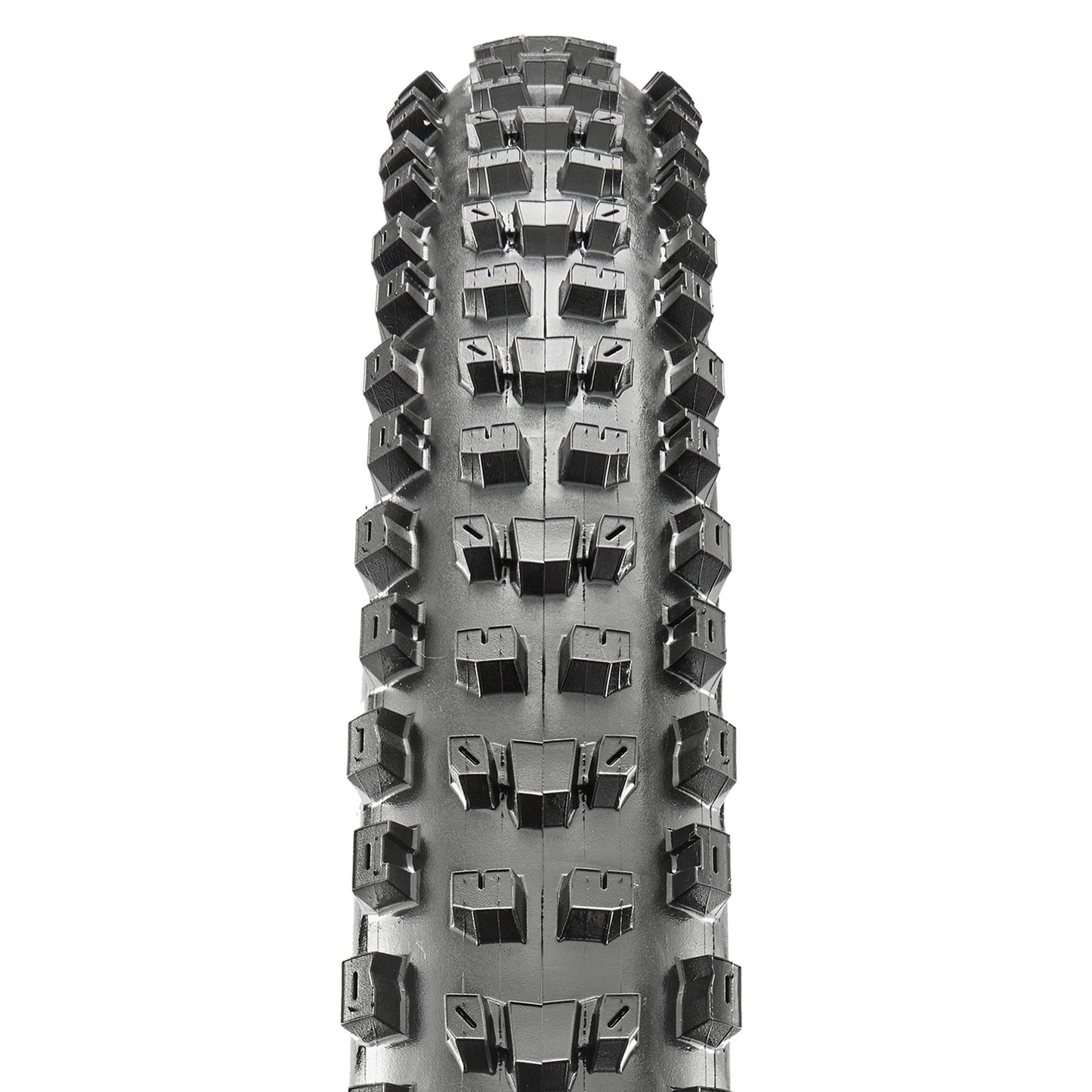
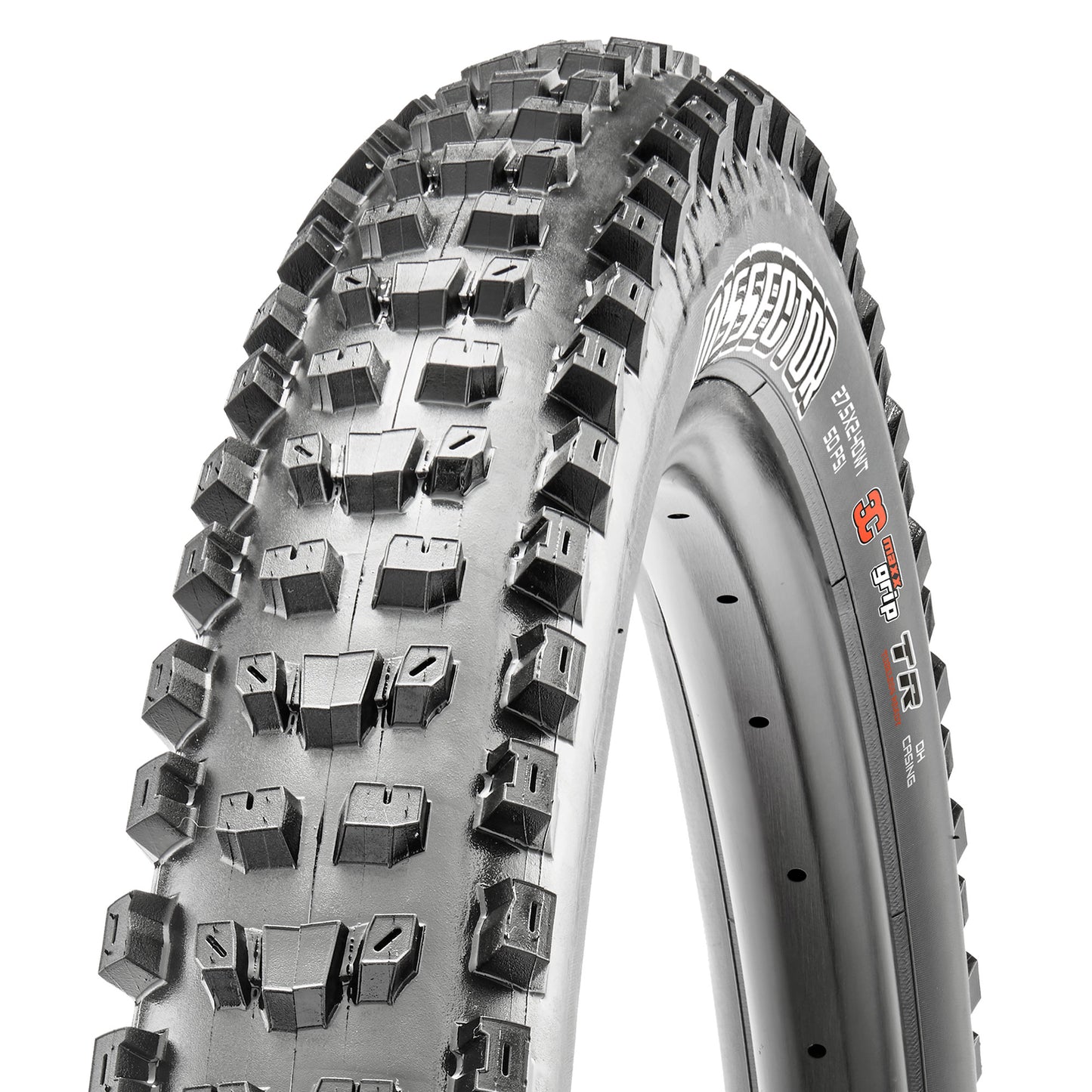
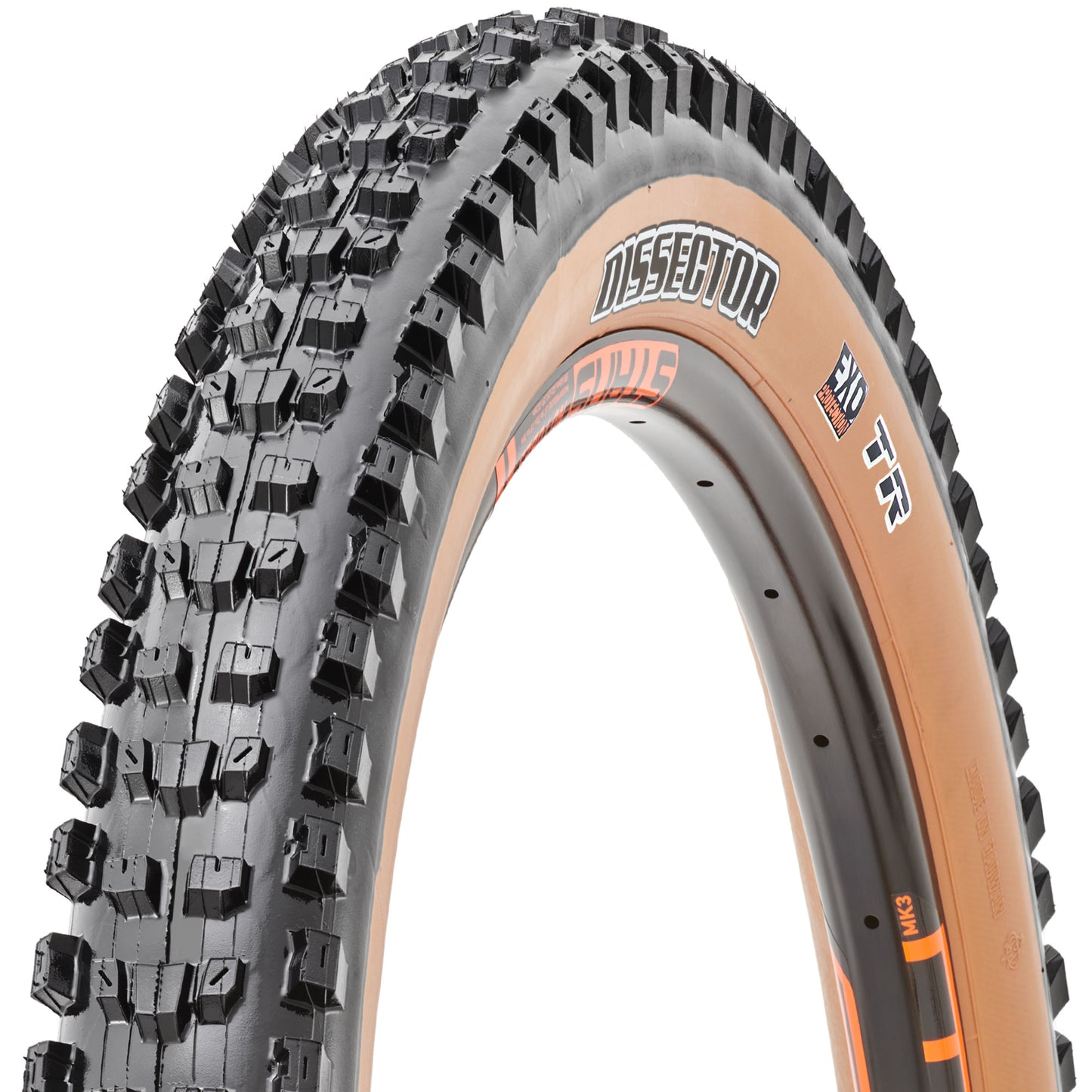
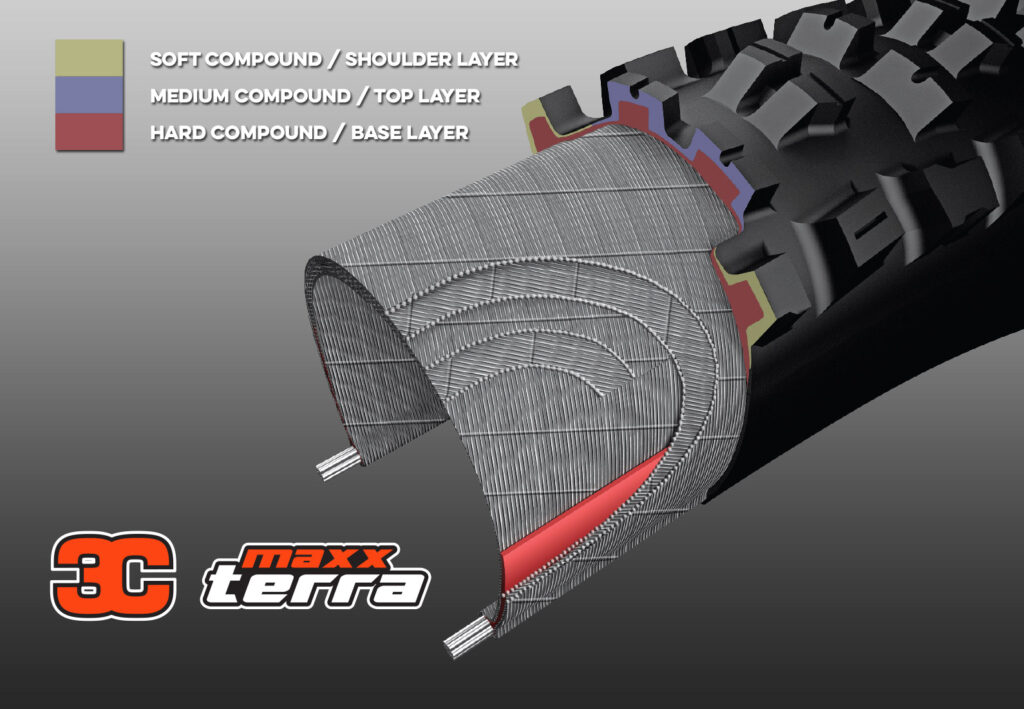
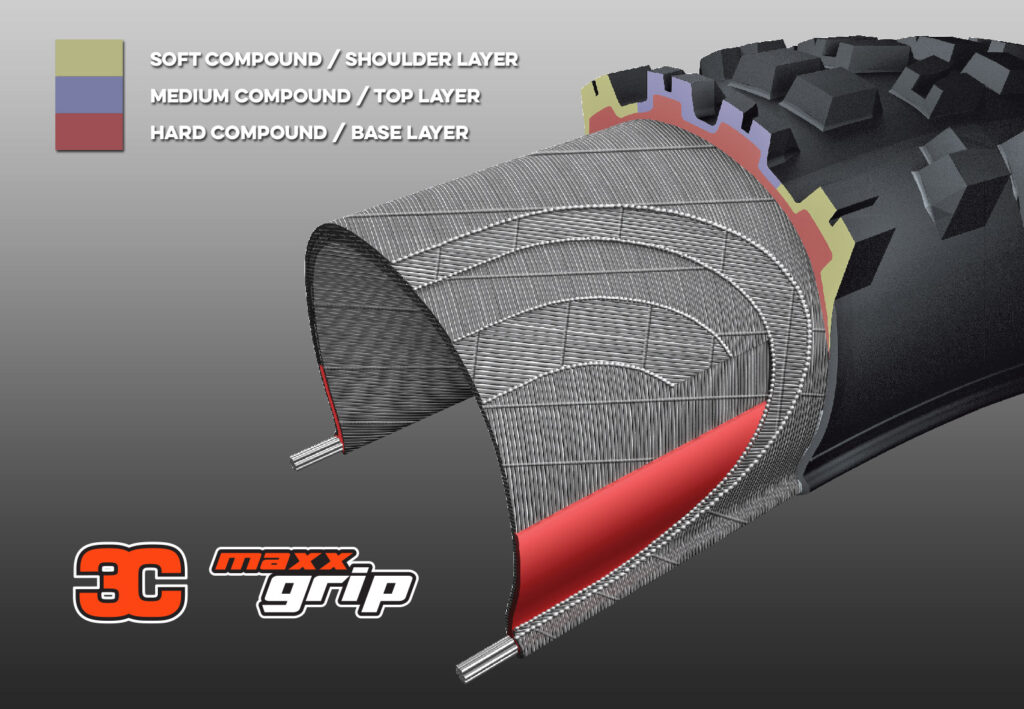
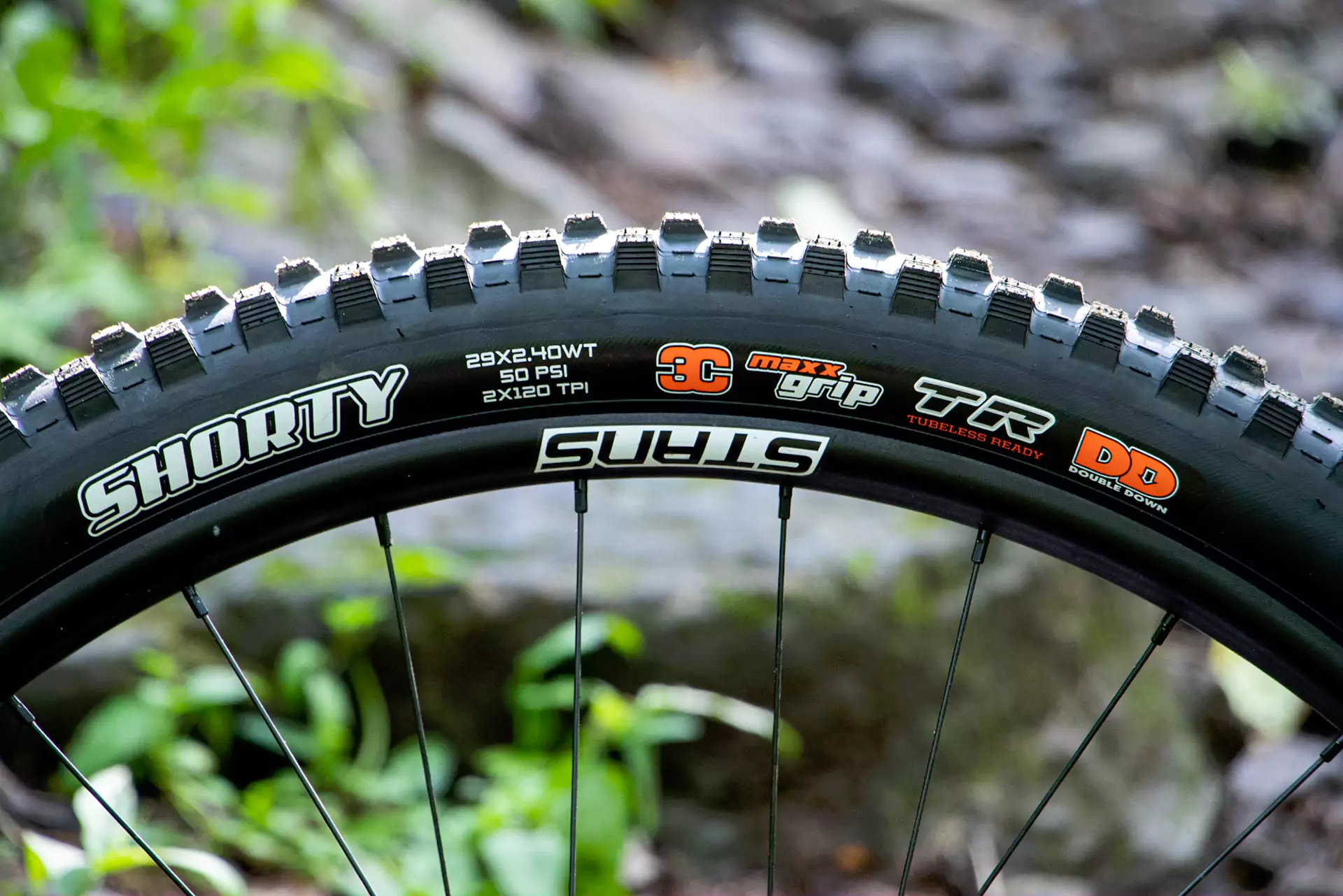
Maxxis’ 3C MaxxTerra is an intermediate triple compound configuration used across our mountain tire line. The 3C MaxxTerra compound offers more traction than 3C MaxxSpeed, yet provides better treadwear and less rolling resistance than MaxxGrip, which makes it ideal for trail riding in all conditions.
3C MaxxGrip
Maxxis’ 3C MaxxGrip compound uses the stickiest, slowest rebounding rubber we offer in a mountain bike tire. This high traction compound is the same one used by our top World Cup Downhill and Enduro World Series athletes and is now available in a variety of casing configurations to cover all riders.
3C MaxxGrip + DoubleDown casing = Enduro racing and e-bikes
3C MaxxGrip + Downhill casing = Downhill racing and long travel e-bikes
EXO
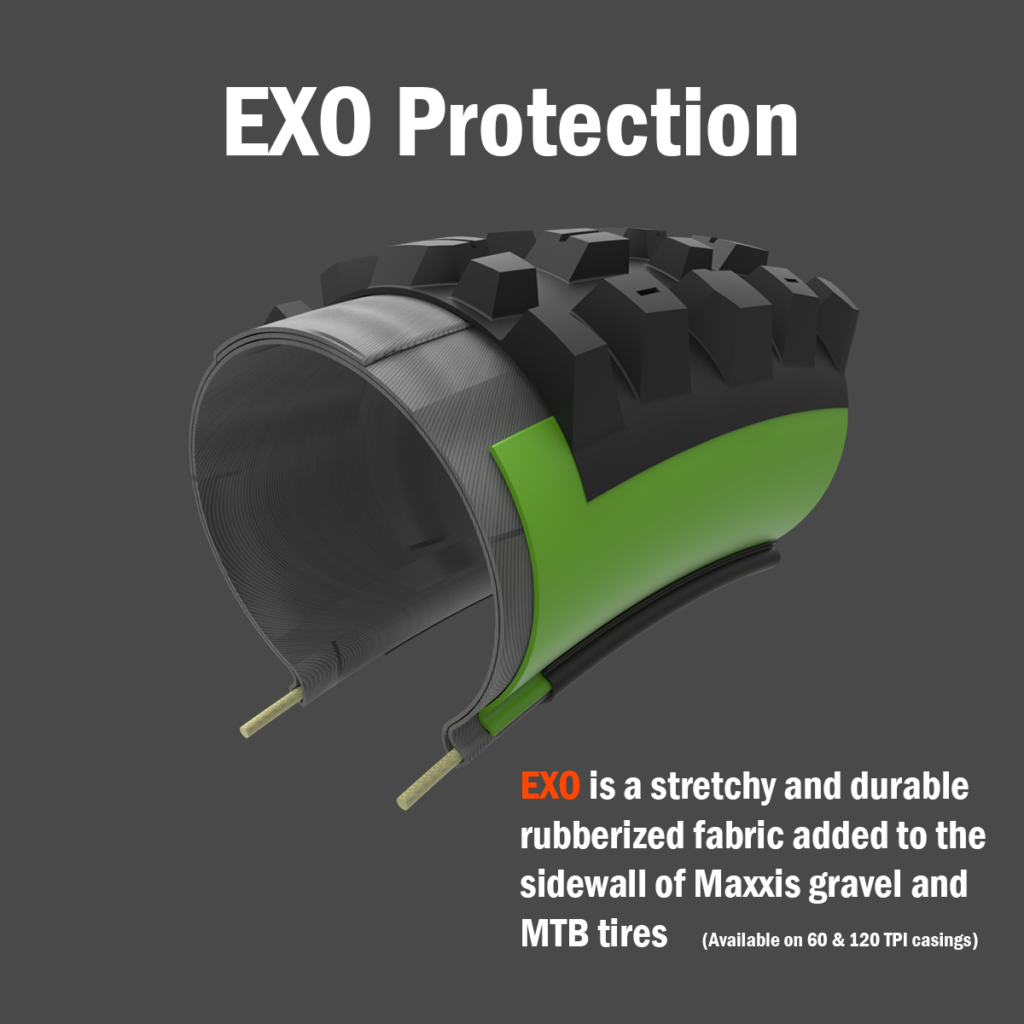
EXO is a cut- and abrasion-resistant material added to the sidewalls of many Maxxis mountain bike and gravel tires. This densely woven fabric is lightweight and highly flexible, ensuring that the performance of the tire remains unaffected. Choose EXO Protection for enhanced durability for gravel, XC, and light-duty trail riding.
EXO+
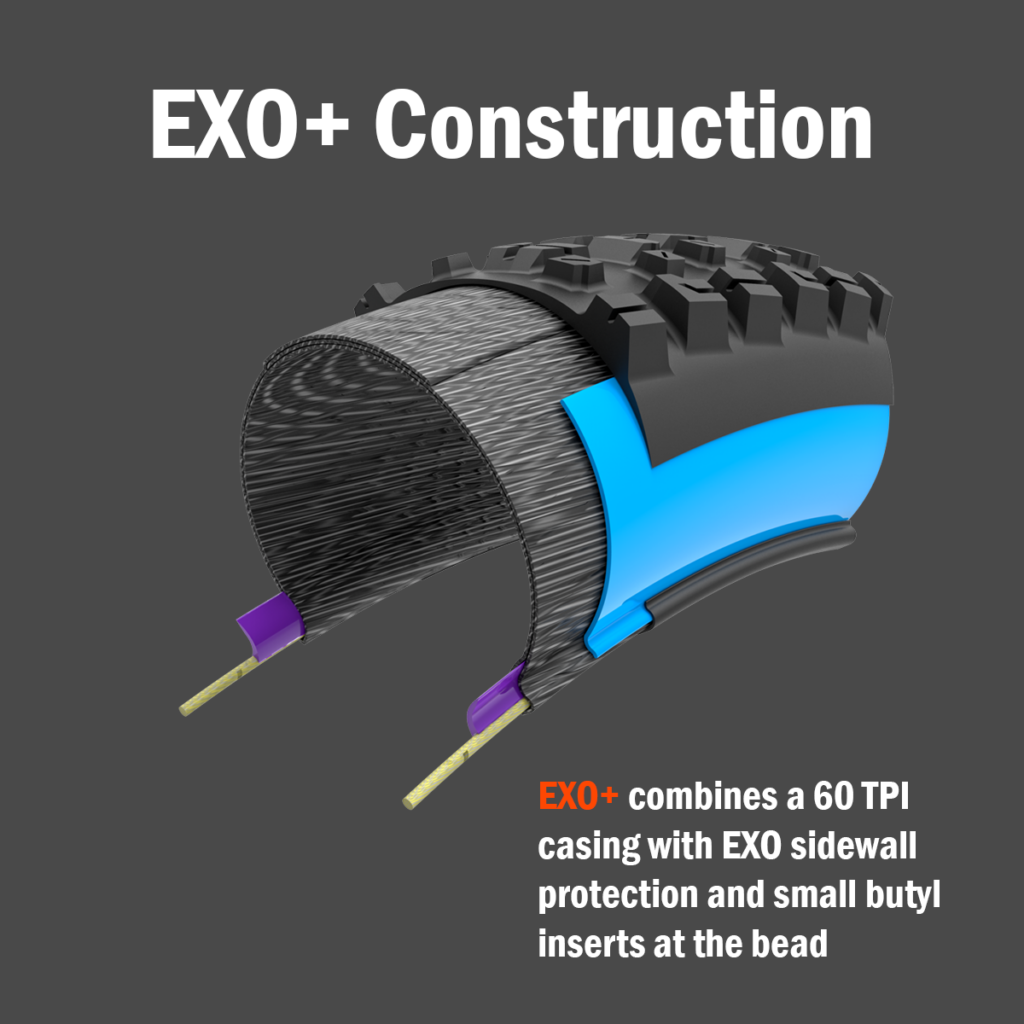
EXO+ is Maxxis’ medium-duty puncture protection option suitable for all-around trail riding and light weight e-bikes. We begin with a durable 60 TPI casing, add in our legendary EXO puncture protection layer in the sidewalls, and top it off with a small butyl insert around the bead. The tough casing and EXO material ward off damage from rocks and roots, while the butyl insert protects the tire from pinch flats and helps prevent rim damage.
Double Down (DD)
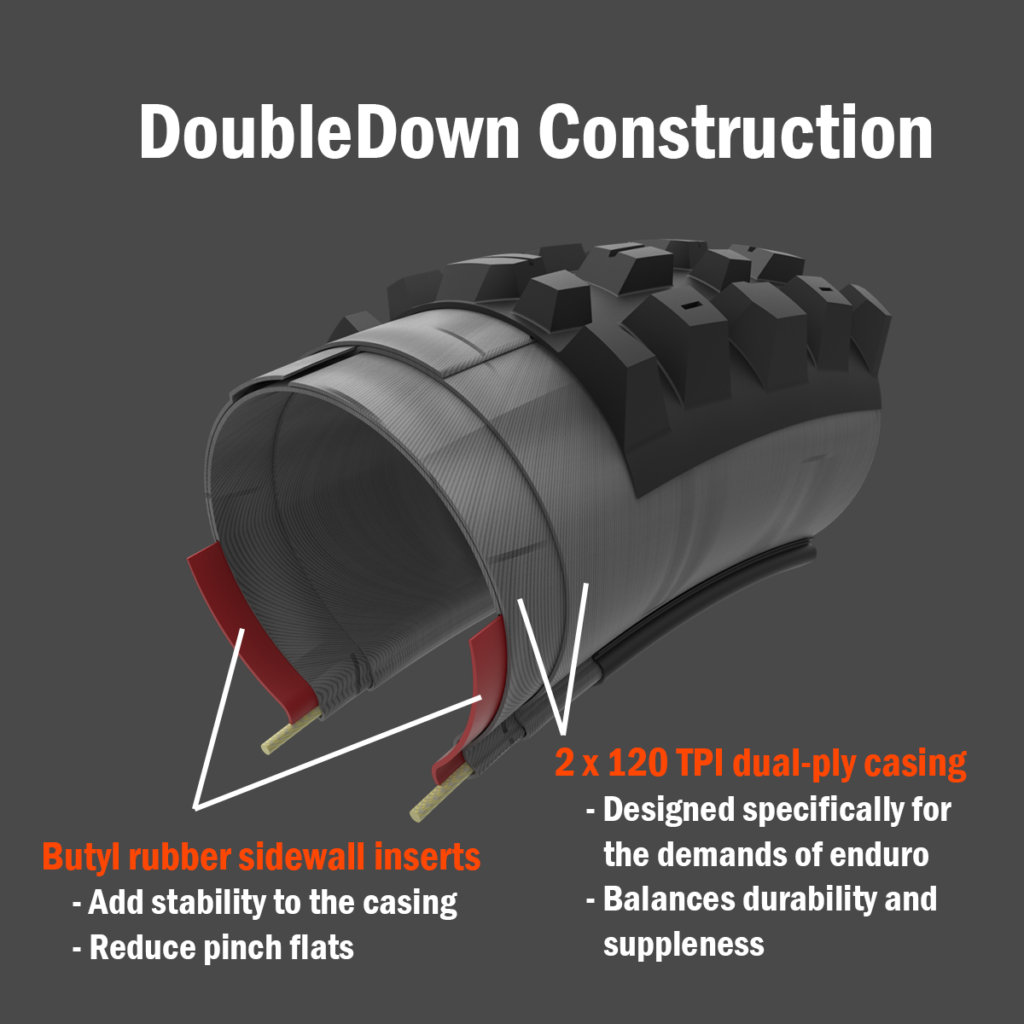
DoubleDown (DD) is our casing solution for enduro racing and e-bike use. Two layers of our lightweight 120 TPI casing material are combined with a butyl sidewall insert to create a highly durable tire with more trail feedback than a Downhill casing tire. DoubleDown tires are marginally lighter than their Downhill counterparts, but it’s really the difference in “trail feel” that sets the two apart. Some riders may prefer the highly damped ride provided by a Downhill casing tire.
Tubeless Ready
Tubeless ready tires provide the rider with many benefits: the ability to run lower air pressures, which improves traction; lower rolling resistance when compared to a tube-type tire; and less chance of flatting because there is no tube. Tubeless ready tires are denoted by the letters “TR” on the sidewall.
Tubeless ready tires must be mounted to tubeless compatible rims and require the use of a liquid sealant to maintain pressure. Liquid sealants have the added benefit of sealing small punctures. Be sure to check your sealant regularly and refresh as needed as it will dry out over time.
Liquid sealants should only be used in the following types of tires: tubeless road, tubular, and tubeless ready. The use of liquid sealants in any other Maxxis tire will void the warranty.
Wide Trail
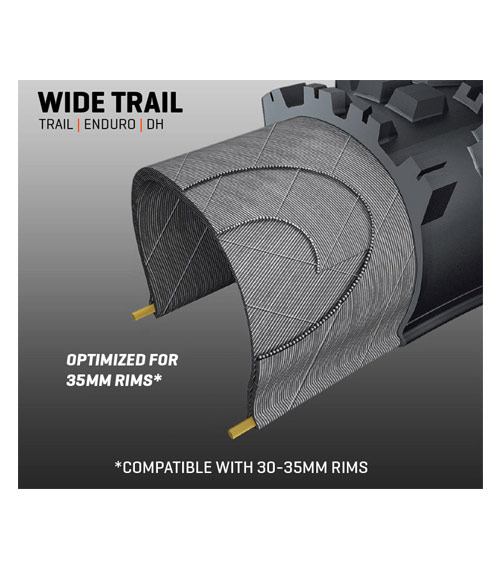
Wide Trail (WT) construction optimizes the tire’s tread layout and profile on today’s modern, wider rims. Historically, tires were designed around older, narrower rims which can create an overly square tire profile, leading to suboptimal performance. Our Wide Trail (2.40-2.50″ width) tires are optimized for a 35mm inner rim width but are proven to work over a range from 30-35mm inner rim widths, depending on the rider’s preference.
Performance Ratings
Rolling Speed
Cornering Control
Braking Traction
Overall rating: 4.8867927 / 5 from 53 reviews.
AI Generated Review Summary
The Dissector Gen 1 tire, designed with Troy Brosnan, offers versatile performance with excellent grip and cornering control. While some users praise its traction, others find it mixed. It's optimized for various trail conditions and features multiple compound and protection options.
"I knew it would be a fast rolling tire, but the corner grip it retains is amazing." — Kevin S.
"I ride east coast loam and this tire is fast with excellent grip." — Jeremy C.
Reviews
A Testament to Quality and Toughness
"I hit this nail. Or, you could say, “I nailed it!” But, thanks to the quality and toughness of my Maxxis Dissector tires, I was able to continue my ride for another nine miles without missing a beat. Definitely my all time favorite tire. I don’t believe any other tire would have survived. Thanks Maxxis!"
— David (5/5)
"More predictable cornering grip than last gen. Last gen could get vague when you get tired and your form starts falling apart. This one still rolls pretty fast for what it is. I use this as a front tire on a Transition Spur with a Forekaster for a back tire."
— William (5/5)
Great Stability & Control
"Great tire with grip and ground control on the trails. I have the Dissector up front and the Aggressor in the rear."
— Juan (5/5)
My new go-to Downcountry setup.
"Light, roll fast, corner hard, and brake fantastic. This is my new go-to downcountry setup. Absolutely fantastic."
— Daniel W. (5/5)
Absolutely dialed. If you thought
"Absolutely dialed. If you thought the V1 Dissector was good - wait until you try the V2. Efficient climber (even with the DD MaxxTerra) - and bomber on the descents."
— Brandon D. (5/5)
Grip and Roll Hard to Beat
"I find this to be my favorite tire for the riding I do here in Orange County, CA, because of its great combination of grip and fast rolling speed."
— Russel B. (5/5)
Placed on the front of
"Placed on the front of my Stumpjumper with 150 front and 130 rear travel. This tire delivered with a fast rolling speed and confidence inspiring cornering. Forkaster on the rear makes for a fun ride. Tracked well in sand."
— Leonard C. (5/5)
Playfully fast 2. 6”
"Put F&R Dissector 29” x 2. 6” tubeless 20-21 psi on my 160mm travel FS Transition. I ride North Idaho hard pack very dry clay/small rough rock trails. It is a FAST rolling pair uphill and down. Metallic pads in the back and resin front brakes really make it a playful combo. Will make you lean into corners. The MaxTerra was slippery when I got to the creek valley slab section. Will keep 2. 5/2. 4” Minnons on the DH bike but happy with the 2. 6” lower psi for the dry clay pine forest flow around me."
— Eric (5/5)
So fast, yet so much
"So fast, yet so much traction."
— Dave G. (5/5)
Rolling speed
"The dissector is a great dry condition tire when you need that extra bit of rolling speed. It's reasonable weight & ability to shed even in wet conditions makes it a very versatile tire. The side lugs give you all the support and traction you need of an aggressive tire without the extra drag in a straight line. I would pick this over a DHR2 if you're looking for a bit less rolling resistance & willing to trade for just a small amount of straight line braking loss. The paddle shape still bites hard but not as much as the DHR2. Very useful tire in the lineup & order came fast just in time for summer."
— Jesse B. (5/5)
Q&A
Can I run a 2.6 dissector front & 2.4 DHR in the back ?
Absolutely, it's very common to run a wider front tire than rear.
what is the difference in tire profile between the 2.4 or 2.6 WT and the non-WT tire options? For reference, will run this on an i9 enduro s wheelset (30mm inner diameter). For a 30mm rim do you suggest always using the WT version, if available? Cheers!
Wide Trail (WT) refers to Maxxis’ 2.40” and 2.50”-wide MTB tires which are optimized for use with 30-35mm internal width rims. WT tires will mount to rims outside this width range; however, the profile will not be ideal which may negatively impact performance.
Does this tire roll faster than a Forekaster as I dictated by the performance rating?
The Dissector is a more aggressive option for trail and enduro riding while the Forekaster is more XC. If rolling speed is your main concern, get the Forekaster.
hi, 2 questions - 1. why is it 2.4 WT and the 2.6 doesnt have WT? I know that WT means wide tire, but does that mean its wider than 2.4 compared to a 2.6 that's not WT? Not a big deal but wondering if WT is more of a tag or does it mean if you see WT then it's "beefed up or something more than the actual size listed? 2nd Q - i have narrower rims, 24mm, my shop and i agreed to try a DHR 2.4 WT last year and seems fine, not perfect but seems good, i can still go as fast as i can on trail rides and no burping or rolling. So, if my 24mm id rims can handle the DHR, can i then expect the same/similar results if i buy a 2.4 Dissector or 2.4 Rekon on that rim? thanks in advance
WT simply means the tires were designed around modern rims widths in the 30-35mm range. This was a way to differentiate our older product offerings that were designed around older, narrower rims. 24mm would be on the lower end of what we would recommend for a 2.4" tire. We would NOT recommend a 2.6" tire on that narrow of a rim, something in the 30-40mm range would be more appropriate. WT doesn't have anything to do with tire durability. Either the Ardent Race or Rekon would be a great rear tire for your needs. The Rekon Race has very low tread height so it's best suited for drier conditions. Update: Chris- If you are looking for a great trail setup for your 5010 24mm rims then a DHF 2.30 front and 2.30 Aggressor rear would be sturdy and grippy with lots of technical and “downhill” capabilities. The DHF would provide plenty of cornering traction and the Aggressor speed as long as it is not too steep and loose where you ride. If you are looking for more of a xc type setup then an Ardent 2.40 front paired to an Ardent Race 2.35 rear would be suggested for a more “speedy” setup. A Dissector 2.40 front and Rekon 2.40 rear would fall between these two setups (“downcountry”) however, depending on your riding style, the fit of the WT tires on your 24mm rims might be questionable as they will start to get more rounded at this point. Hope this helps!
If I buy this tire will it come with two or just one?